The Light Bill Is Part of the Build: Designing Energy Costs Out of Your South Texas Commercial Building

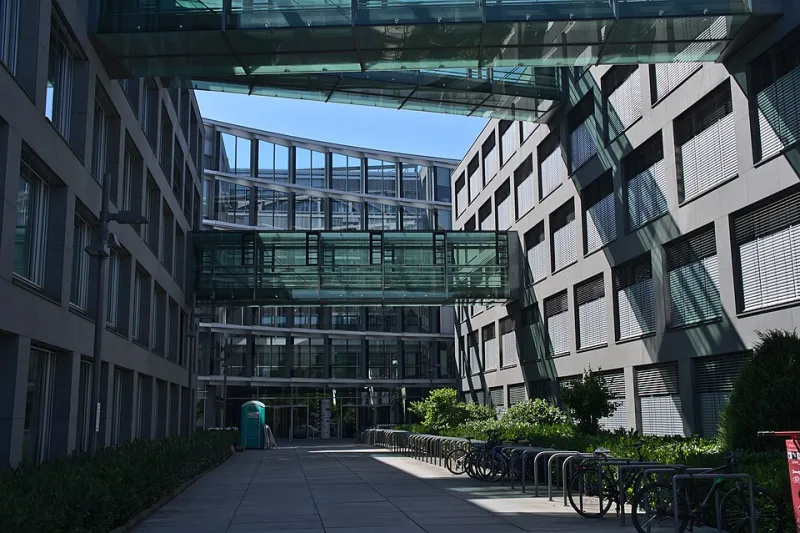
Photo: Alfred Twu, CC0, via Wikimedia Commons
When owners compare construction bids, the conversation usually centers on the upfront number. What gets far less attention is the second price tag — the one that arrives every month for the life of the building. In a climate where cooling season stretches from April through October and summer utility rates climb with every heat dome that parks over the Rio Grande Valley, that second price tag can rival the first.
The encouraging news is that energy performance isn't luck. It's engineered. And the decisions that matter most are made long before the meter is ever installed.
The Roof Is the First Line of Defense
No surface on a South Texas building absorbs more punishment than the roof. A conventional dark membrane on a July afternoon in Laredo or McAllen can push past 160 degrees Fahrenheit, and every degree of that heat conducts downward into the conditioned space below.
Cool roofing systems — reflective membranes, coated metal panels, or even simple white TPO — can cut roof surface temperatures by 50 degrees or more. The difference shows up directly in cooling loads. On a 40,000-square-foot warehouse, the choice between a dark and a reflective roof can translate into thousands of dollars per year, every year, for decades.
Insulation above the deck matters just as much. Code minimums are exactly that: minimums. Stepping up from R-19 to R-30 in the roof assembly is one of the least expensive upgrades available at design time and one of the most durable in its payoff.
Glazing: Where Views Meet Utility Bills
Glass sells buildings, but glass also imports heat. The wrong window package on a west-facing showroom in San Antonio can turn an afternoon into a battle the HVAC system loses daily.
Three specifications do most of the work here. First, low-emissivity (low-E) coatings that reflect infrared radiation while admitting visible light. Second, a low solar heat gain coefficient (SHGC) on sun-exposed facades. Third — and most often overlooked — orientation. Simply rotating a rectangular building so its long faces point north and south, and concentrating glazing away from east and west exposures, costs nothing on paper yet changes the thermal math permanently.
Right-Sizing the Machine Room
There's a persistent instinct to oversize HVAC equipment, as if bigger means safer. In practice, an oversized rooftop unit short-cycles: it cools the air quickly, shuts off before it has dehumidified the space, and leaves occupants in a clammy, uncomfortable building that runs more, not less.
A load calculation performed on the actual building — its insulation values, glazing, infiltration rates, and internal gains — regularly produces equipment selections 15 to 25 percent smaller than rule-of-thumb sizing. Smaller equipment costs less to buy, less to maintain, and less to run, while delivering better comfort.
What the Numbers Look Like in Practice
Consider two similar 20,000-square-foot office buildings in Corpus Christi. One is built to code minimums with conventional assumptions. The other adds reflective roofing, upgraded insulation, low-E glazing, a right-sized high-efficiency HVAC package, and LED lighting with daylight controls — typically a 2 to 4 percent increase in total construction cost.
At South Texas utility rates, the efficient building commonly posts annual energy costs 25 to 35 percent lower. On a $40,000 annual electric bill, that's $10,000 to $14,000 back in the owner's pocket each year. Over a 20-year hold, the upgrade pays for itself several times over, before accounting for utility rebate programs and the resale premium that efficient buildings increasingly command.
Build the Bill You Want
Energy performance is one of the few areas of commercial construction where the cheapest moment to act is also the most effective one. Once walls are closed up and equipment is ordered, the opportunity is gone.
Our advice to owners across South Texas is consistent: bring energy decisions into the pre-construction conversation, ask contractors to price the upgrades as line items, and treat the utility bill as a design deliverable. Buildings here are standing for half a century or more. The ones that were designed against the heat, not merely built under it, are the ones their owners never regret.