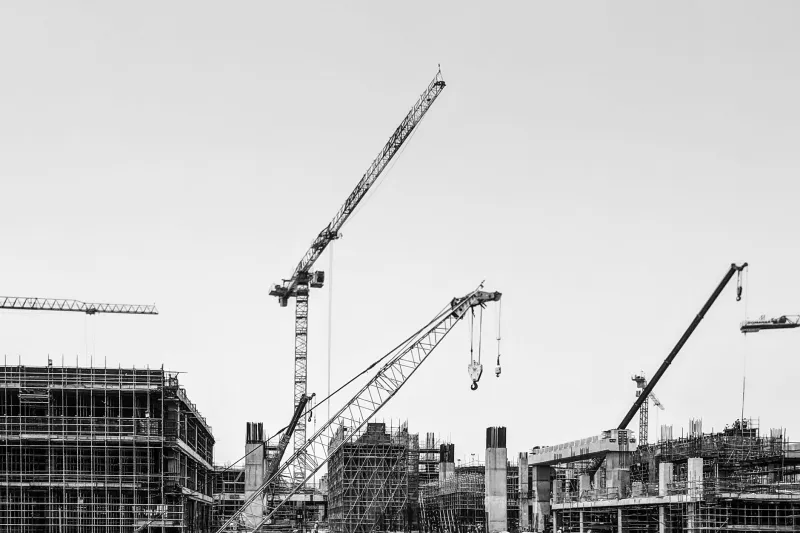
The Dirt Under the Deal: Why Site Selection Can Make or Break Your Commercial Budget in South Texas
Photo: Fumikas Sagisavas, CC0, via Wikimedia Commons
Every commercial project starts with a piece of land, and every piece of land starts with a price per acre. But in South Texas, that number can be misleading. Two similarly priced lots in the same county can produce project budgets that differ by hundreds of thousands of dollars — and the difference is usually buried in the ground.
We've walked enough sites across Hidalgo, Nueces, and Bexar counties to know the pattern. The lot that looks like a bargain on paper often becomes the most expensive parcel on the table once geotechnical reports, drainage studies, and utility extension quotes come back. Understanding what drives those costs before you go under contract is one of the most valuable things an owner can do.
Expansive Clay and the Cost of What You Can't See
Much of South Texas sits on expansive clay soils that swell when wet and shrink when dry. In the Rio Grande Valley and parts of San Antonio's outlying areas, this movement is severe enough to dictate foundation design from day one.
A slab that would work on stable sandy soil may need deep drilled piers, structural fill, or a thicker engineered foundation on clay. Those aren't small line items — foundation upgrades alone can add six figures to a mid-size commercial build. A geotechnical boring report, typically a few thousand dollars, is the cheapest insurance an owner can buy. Ordering one during your due diligence period, before the purchase is final, is non-negotiable in our view.
Flood Zones and the Map That Governs Everything
Along the Coastal Bend and throughout the Valley, floodplain designations shape both design and insurance costs. A parcel inside a mapped flood zone may require elevated finished floors, retention ponds, or costly FEMA letter-of-map-change processes.
Don't rely on the seller's assurances. Pull the current FEMA panel, then ask the local floodplain administrator whether recent developments upstream have changed modeled flows. In fast-growing corridors, drainage patterns shift as neighbors grade and pave. The empty field next door that drains today may become your stormwater problem tomorrow.
Utilities: The Distance That Multiplies
Water, sewer, electric, and gas access is where land deals quietly unravel. Extending a sewer line 1,500 feet — or worse, paying for a lift station — can consume an entire contingency budget.
When evaluating a site, ask three questions: How far is the nearest adequate utility connection? Who owns the infrastructure between? And what capacity fees will the local provider charge at hookup? In unincorporated areas, well and septic may seem like a workaround, but commercial permitting and health department requirements often make municipal service the only realistic path.
Drainage Is a Design Discipline, Not an Afterthought
Flat South Texas terrain is a double-edged sword. It's easy to build on, but water has nowhere to go. Sites with minimal fall may require significant import or export of fill, engineered detention systems, and coordination with neighboring parcels on shared drainage.
A topographic survey during due diligence reveals the story. If the lot drains toward a road, a creek, or a neighbor, plan for the cost of managing that water — because the county will require you to.
A Practical Site-Walk Checklist
Before you sign a purchase agreement, we recommend owners complete the following:
- Order a geotechnical report. Two to three borings minimum for a commercial parcel.
- Pull the current FEMA flood map and confirm with the local floodplain administrator.
- Verify utility locations and capacity in writing from each provider, including impact fees.
- Commission a topographic survey to understand drainage, fall, and fill requirements.
- Check zoning, setbacks, and easements — a transmission line easement or drainage ditch can erase usable acreage.
- Visit after a heavy rain. Standing water tells you more than any brochure.
- Confirm access and curb cuts with TxDOT or the municipality before assuming your entrance will be approved.
The Bottom Line for South Texas Owners
Land is rarely cheap or expensive in absolute terms — it's cheap or expensive relative to what it costs to build on. The most successful projects we see start with owners who spend a modest amount on due diligence and, as a result, either negotiate a better price or walk away from a money pit.
If you're evaluating a site in the Valley, the Coastal Bend, or the San Antonio metro, bring your contractor into the conversation early. A half-day of professional review before you close can protect a budget you'll be living with for decades.