The Dock Door Is a Border: Designing South Texas Loading Bays for Heat, Rain, and Turnaround
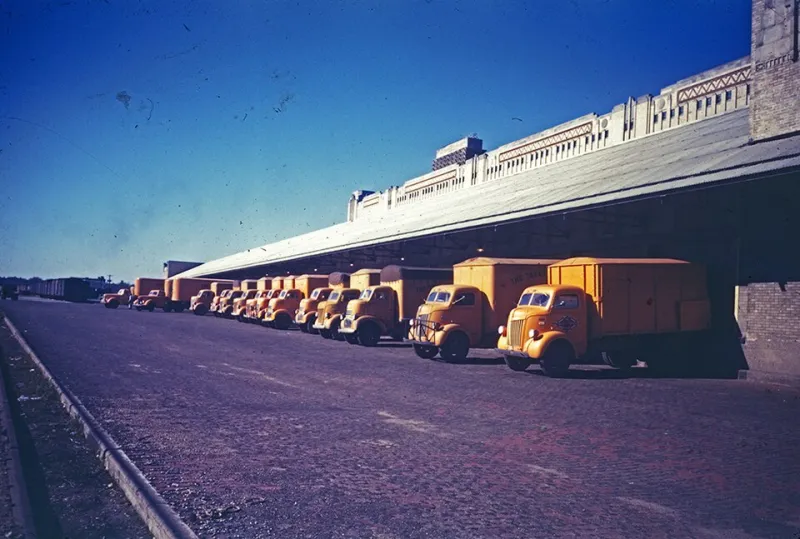
Photo: Robert Yarnall Richie, No restrictions, via Wikimedia Commons
The loading dock is rarely the first thing an owner studies on a set of drawings. It is usually a concrete apron, a few doors, some bumpers, and a note about drainage. Yet the dock is one of the most demanding zones in a warehouse or flex building. It is where trucks arrive, where conditioned space meets the outdoors, and where wind-driven rain, heat, and vehicle movement converge. In South Texas, a poorly designed dock is not merely inconvenient. It is a climate machine that works against the tenant every day.
The Dock Is an Envelope Component, Not a Concrete Apron
A dock door is an opening in the building envelope, and it should be detailed with the same care as a storefront or a roof edge. When the door is closed, the seal between the door and the truck trailer is the only barrier between the interior and the outside air. When the door is open, the interior is exposed to heat, humidity, insects, and rain. The building's HVAC system, refrigeration load, and tenant comfort all depend on how well that boundary is managed.
Owners should think about the dock in two modes: closed and operating. In the closed mode, the door, seals, and wall insulation determine heat gain and water resistance. In the operating mode, the canopy, drainage, leveler, and traffic geometry determine how quickly and safely the truck can be serviced. A design that works in only one mode is incomplete.
Seals, Shelters, and the Cost of a Bad Fit
Dock seals and shelters are the first line of defense. Seals are typically foam or fabric pads that compress against the trailer sides and top. Shelters use a larger fabric enclosure that surrounds the trailer. Seals work best with a consistent fleet of trailers; shelters accommodate more variation but can be damaged if trailers are badly off-center.
The common failure is not the product but the fit. A seal that leaves gaps at the corners or along the top lets rain and heat enter. A shelter that is torn or poorly tensioned becomes a wind catcher. In South Texas, where afternoon thunderstorms can arrive with little warning, a gap of a few inches is enough to wet a trailer floor and create a slip hazard. The dock hardware should be selected for the actual truck mix, not for a generic specification.
Levelers, Pits, and the Maintenance Trap
Dock levelers bridge the gap between the building floor and the trailer bed. Pit levelers are common in commercial warehouses; surface-mounted units are easier to retrofit but consume apron space. The leveler should be rated for the loads it will see, including forklifts and pallet jacks, and it should be maintained on a schedule. A binding leveler slows every truck and eventually becomes a safety issue.
Pit drainage deserves attention. Water that collects in the pit can corrode components and create a mosquito habitat. The pit should drain away from the building, and the surrounding pavement should slope so that water does not stand at the door. Small details like bumper placement and keepers matter as well; a damaged bumper can allow a trailer to contact the wall and break the seal.
Canopy, Drainage, and the Rain That Comes Sideways
A canopy over the dock is not a luxury in this climate. It protects the trailer, the cargo, and the worker during loading and unloading. The canopy should be deep enough to cover the working area, and it should be designed for wind uplift and positive drainage. Gutters and downspouts should discharge away from the dock apron, not onto it.
The pavement profile is just as important. The apron should slope away from the building at a grade that accommodates trucks without creating a steep transition at the leveler. Trench drains can help where the building geometry traps water, but they must be maintained. In a heavy rain, a dock that ponds water will slow operations, damage cargo, and eventually undermine the pavement.
Heat Gain Begins at the Opening
Every time a dock door opens, the building exchanges air with the outdoors. In a conditioned warehouse or flex space, that exchange is a direct energy cost. Fast-acting doors, insulated panels, and proper weather seals reduce the duration and volume of the exchange. Air curtains can help in some layouts, but they are not a substitute for a well-sealed door and a disciplined operating routine.
Tenants can undermine good design by leaving doors open for convenience. The building should make the right behavior easy: controls that are simple to use, doors that operate reliably, and a dock layout that does not force drivers to prop doors open. In refrigerated spaces, the stakes are higher, and the dock should be treated as part of the refrigeration envelope.
Truck Turnaround and Site Geometry
The dock apron is a traffic facility. Trucks need room to approach, back in, pull out, and queue without blocking fire lanes or tenant parking. The turning radius, apron depth, and column spacing should be checked against the largest vehicle the tenant expects. A dock that works for a 28-foot box truck may fail for a 53-foot trailer.
The site should also provide a safe pedestrian path. Drivers and warehouse workers should not share the same narrow strip between trailers. Lighting, signage, and wheel chocks are small items that prevent large incidents. For flex-space buildings with multiple tenants, the dock may be shared, which makes scheduling and clear rules even more important.
Design for Move-In, Not Just Move-Through
A dock is often the first part of a building a tenant uses and the last part the design team thinks about. Commissioning the dock hardware, testing the doors and levelers, verifying drainage, and training the tenant on operation can prevent months of small failures. The goal is not a showpiece. It is a durable, understandable boundary that keeps water out, keeps conditioned air in, and keeps trucks moving.
In South Texas, that boundary is tested by heat, humidity, and sudden storms. The loading dock deserves the same engineering attention as the roof and the facade. When it gets that attention, it stops being a forgotten apron and becomes what it should be: a reliable working edge of the building.