Built on Spec or Built on a Signature: Choosing the Right Path for Your Next Commercial Development
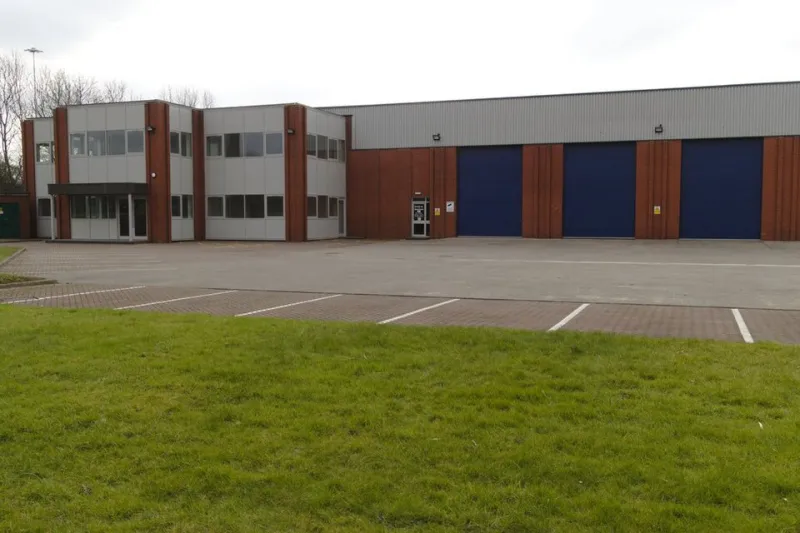
Photo: Mark Anderson , CC BY-SA 2.0, via Wikimedia Commons
Drive down any commercial corridor in the Rio Grande Valley or the Coastal Bend and you will see both sides of the same story. One warehouse, finished and gleaming, has a tenant sign on the marquee before the landscaping goes in. Another, equally well-built, has a lockbox on the door and a broker's flyer taped to the glass — two years running.
The difference is rarely construction quality. It is the decision made long before the first footing was poured: was this building speculative, or was it built to suit?
The Spec Bet, Explained
A speculative building — a "spec" in industry shorthand — is constructed without a committed tenant. The developer is wagering that demand exists, that the finished product will match what the market wants, and that the carrying cost of vacancy will be outlasted by the eventual lease.
In hot markets, that bet pays off quickly. Along the I-35 corridor and in pockets of McAllen's industrial sector, well-located distribution space has leased fast enough that spec developers barely had time to market it. But South Texas is not one uniform market. A 40,000-square-foot flex building that fills in San Antonio can sit empty in a submarket where the anchor employer just paused hiring.
The math of vacancy is unforgiving. Property taxes, insurance, minimal maintenance, and debt service continue whether anyone occupies the space or not. A building that sits eighteen months can erase the entire margin a developer projected on the deal.
Why Build-to-Suits Lease Before They're Built
A build-to-suit inverts the sequence. The tenant signs first; the building follows. Construction is tailored to the occupant's exact requirements — clear heights, dock ratios, office-to-warehouse split, power capacity — which means the finished product has a buyer the day it's delivered.
For tenants, the appeal is obvious: no compromise, and often a landlord willing to amortize improvements into the rent. For developers and owner-users, the appeal is risk control. A signed lease at financial close is the strongest collateral a lender can ask for, which typically means better financing terms and faster approvals.
The trade-off is patience. Build-to-suit deals take longer to originate because they depend on finding a tenant with unmet needs and negotiating a lease before design begins.
Reading the Market Before You Commit
Before choosing a path, owners in Corpus Christi, McAllen, and the surrounding counties should weigh a few market signals:
- Absorption trends. Is the submarket actually absorbing new space, or just recycling tenants between existing buildings?
- Vacancy by product type. Industrial, retail, and flex space move on different clocks. A headline vacancy rate can hide a surplus in exactly the category you plan to build.
- Anchor activity. New manufacturing plants, port expansions, and hospital investments pull supply chains — and tenants — behind them.
- Rent spreads. If achievable rents barely exceed replacement cost economics, spec development has no cushion for a slow lease-up.
- Land position. A cheap site in an unproven location rarely compensates for a building nobody asked for.
The Middle Ground
The choice is not always binary. Many owners in South Texas pursue hybrid strategies: shell-and-core construction on spec with interior build-out deferred until a tenant signs, or a spec building designed with flexible features — extra power, standard dock spacing, generous truck courts — that widen the pool of future occupants.
Some developers also negotiate short-term build-to-suit terms with strong prospects while carrying a modest spec component to keep the pipeline moving.
A Practical Starting Point
Whether you are an owner-user planning your next facility or an investor weighing a development, the sequence matters: study the submarket, understand who your tenant actually is, and let that answer dictate whether you build on faith or on a signature.
At SouthTexa Contracting, we have walked both roads with clients across the region. The buildings that lease fastest are rarely the ones that were cheapest to build — they are the ones that were built for somebody. Getting to that clarity before groundbreaking is the least expensive decision you will make on the entire project.