Two Structures, One Decision: Steel Frame or Tilt-Wall for Your Next Commercial Build
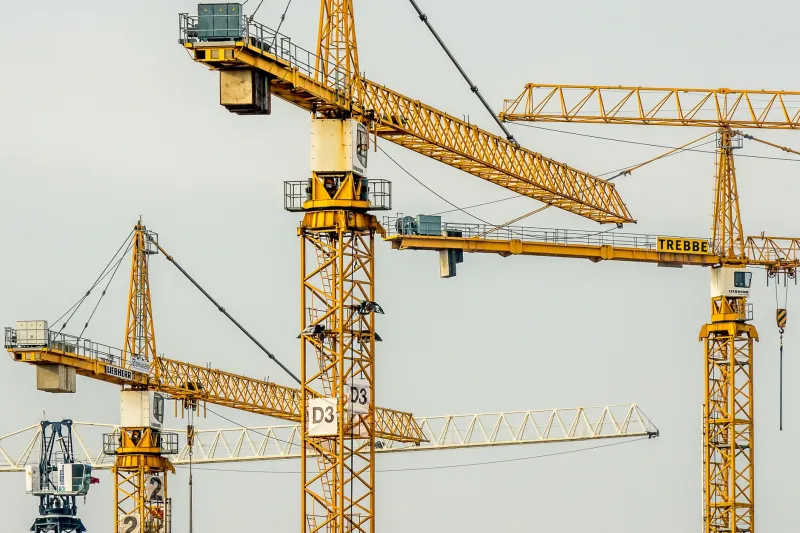
Drive any commercial corridor in South Texas and you'll see the same two building systems repeating themselves: the sweeping curved roofs of steel-frame warehouses, and the clean, monolithic walls of tilt-wall retail and industrial parks. These two methods account for the overwhelming majority of commercial square footage from San Antonio down to the border, and for good reason — both are fast, economical, and proven in our climate.
But they are not interchangeable. Having built with both across the region, we have opinions on where each one belongs. Here's the honest breakdown.
The Case for Steel: Speed and Span
Pre-engineered metal buildings and structural steel frames remain the workhorses of South Texas construction, and their advantages are straightforward:
- Cost. A basic pre-engineered steel warehouse shell typically lands in the $45 to $75 per square foot range for the structure, with fully finished turnkey buildings running $90 to $150 depending on use and finish level.
- Clear spans. Nothing else matches steel when you need wide-open interiors — distribution centers, manufacturing floors, and sports facilities depend on it.
- Speed. Pre-engineered systems are fabricated off-site while foundations cure, compressing schedules considerably.
- Flexibility for growth. Adding a bay or expanding a steel building later is a well-understood, affordable exercise.
The trade-offs: insulation and interior finish in metal buildings require careful detailing to meet modern energy codes, and the aesthetic is, frankly, industrial. For some brands that's fine. For others, it's a nonstarter.
The Case for Tilt-Wall: Durability and Presence
Tilt-wall construction — casting concrete wall panels on the slab, then lifting them into place — has become the default for Class A industrial, big-box retail, and office-warehouse hybrids across the region. Why owners choose it:
- Hurricane and wind resilience. Along the Coastal Bend, this is the deciding factor. Reinforced concrete panels with proper connections dramatically outperform light-gauge steel cladding in high-wind events, which translates into lower insurance premiums and faster post-storm recovery.
- Durability. Concrete walls shrug off forklift impact, hail, and the South Texas sun in ways that metal panels cannot. Twenty-five years out, a tilt-wall building typically needs less envelope maintenance.
- Appearance. Tilt-wall can be finished with reveals, pigmentation, and architectural detailing that reads as permanent Class A product — a real advantage for owner-occupiers and tenants with brand standards.
- Thermal mass. Concrete's density moderates interior temperature swings, trimming cooling loads during long cooling seasons.
Costs run higher: expect $70 to $100 per square foot for the shell on typical industrial product, and 15 to 25 percent more than an equivalent steel structure in many cases. Tilt-wall also demands more site space during construction and a well-orchestrated lifting sequence.
So Which One?
Our rule of thumb:
- Choose steel when clear span, speed, and initial cost dominate — speculative warehouse shells, agricultural and flex buildings, and projects where future expansion is likely.
- Choose tilt-wall when durability, wind exposure, or image matter most — coastal projects from Corpus Christi southward, Class A industrial parks, big-box retail, and any building where the owner plans to hold the asset long-term.
Hurricane resilience deserves special emphasis. Since Hurricane Harvey, insurers along the Gulf Coast have scrutinized building envelopes harder than ever, and concrete construction consistently earns more favorable terms. For a coastal distribution facility, the tilt-wall premium can be offset within a decade through insurance and maintenance savings alone.
The Decision That Outlives the Budget
It's tempting to let the lowest first cost make this call, but structural systems are effectively permanent — changing your mind after the slab is poured isn't an option. We encourage every owner to model total cost of ownership over 20 to 30 years: insurance, maintenance, energy, and resale positioning, not just the contract price.
Build the analysis that way, and the right answer usually announces itself. For some projects it's steel, fast and economical. For others it's tilt-wall, quiet and nearly indestructible. Either way, South Texas has the labor, materials, and expertise to deliver both — which is exactly why these two systems will keep defining our skylines for the next generation.