Three Paths to the Same Building: Choosing a Delivery Method That Fits Your Project
Ask three owners in the same commercial park how their buildings were delivered and you will likely get three different answers. One hired an architect first and bid the plans out. Another signed a single contract with a design-build firm. A third brought a construction manager on board during design. All three ended up with finished buildings. The differences showed up in their budgets, their stress levels, and their timelines.
Delivery method is one of the most consequential — and most overlooked — decisions in commercial construction. Here is how the three dominant approaches actually work, and where each one earns its keep in the South Texas market.
Design-Bid-Build: The Traditional Route
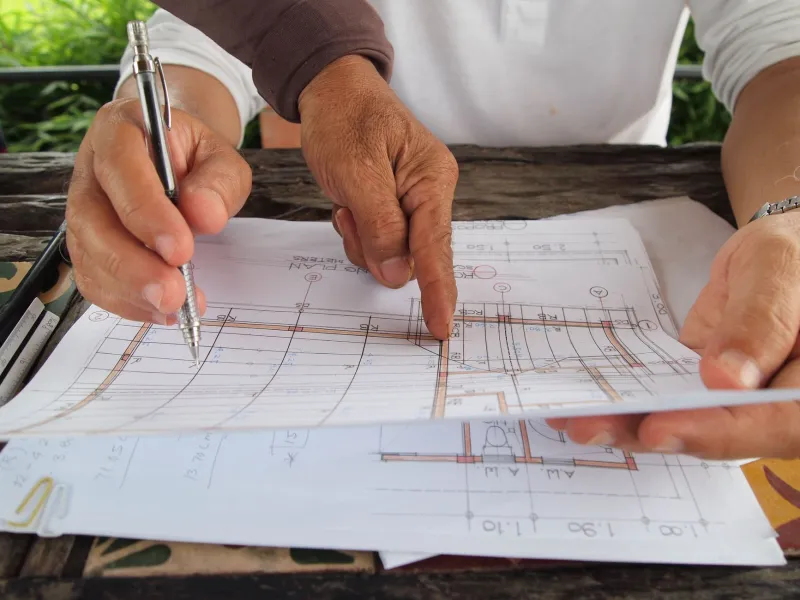
In this model, the owner hires an architect or engineer to produce complete construction documents, then bids those documents to general contractors, awarding the job to the lowest qualified bidder. The owner holds two separate contracts: one with the designer, one with the builder.
Where it wins: Public and institutional work. School districts, municipalities, and state agencies across Texas often require competitive sealed bidding, making this method a legal necessity. It also delivers genuine price competition — when the drawings are complete, bidders are pricing the same scope, and the numbers are directly comparable.
Where it struggles: Speed and single-point accountability. Nothing can be priced accurately until design is finished, and when a conflict appears in the documents during construction, the owner is the referee between designer and builder. Change orders are common, and the owner absorbs much of the risk. For a straightforward project with a patient owner — a small office building in Edinburg, say — it works fine. For anyone in a hurry, it rarely does.
Design-Build: One Contract, One Throat to Choke
Design-build collapses design and construction into a single contract with one entity responsible for both. The owner states performance requirements, and the design-builder delivers a completed project against them.
Where it wins: Fast-track schedules and owner simplicity. Because design and construction overlap, a tilt-wall warehouse in Laredo can break ground while the permitting set is still being finalized. There is a single point of accountability — the design-builder cannot blame the architect, because the architect is on their team. For owners without construction expertise, this is often the lowest-friction path. Retail tenants and developers rolling out standardized build-outs across multiple South Texas locations tend to favor it for exactly this reason.
Where it struggles: Price comparison and design control. Because each design-builder proposes a different design, bids are not apples to apples. And owners who want tight control over architectural detail may find the method compresses their influence — the design serves the guaranteed price, not the other way around. A well-written request for proposal with clear performance criteria mitigates both problems.
Construction Manager at-Risk: A Middle Path
Under CM at-risk, the owner selects a construction manager early — often during design — based on qualifications and fee. The CM provides preconstruction input, then commits to a guaranteed maximum price and self-performs or subcontractors the work. The owner retains the architect under a separate contract.
Where it wins: Complex or phased projects where constructability matters. A medical office building in San Antonio, with its dense mechanical, electrical, and plumbing coordination, benefits enormously from a builder reviewing drawings while they are still on the screen. The CM can price in stages, provide early input on materials and lead times, and give the owner cost feedback before the design is locked. Owners get professional advocacy without giving up their own architect.
Where it struggles: It requires a more sophisticated owner who wants to engage in the process. The GMP also needs honest scrutiny — a guaranteed maximum price padded with generous contingency is not much of a guarantee.
Matching Method to Project
A rough guide for South Texas owners:
| Project Type | Often the Best Fit |
|---|---|
| Public bid, institutionally funded | Design-bid-build |
| Retail build-out, warehouse, tenant finish, tight timeline | Design-build |
| Medical, industrial process, phased campus work | CM at-risk |
None of these is universally superior. The right question is not which method is best, but which risk you are best equipped to carry — design risk, schedule risk, or coordination risk — and which contract structure puts that risk with the party most able to manage it. Owners who answer that question before selecting a team routinely report smoother projects than those who pick a contractor first and figure out the paperwork later.